Understanding perfume
How to identify perfume notes
Start identifying perfume notes by describing broad impressions and familiar references before naming precise materials. You do not need to recognize every listed note, and smelling a finished perfume cannot reliably reveal its complete formula.
A HUME Fragrance buying guide
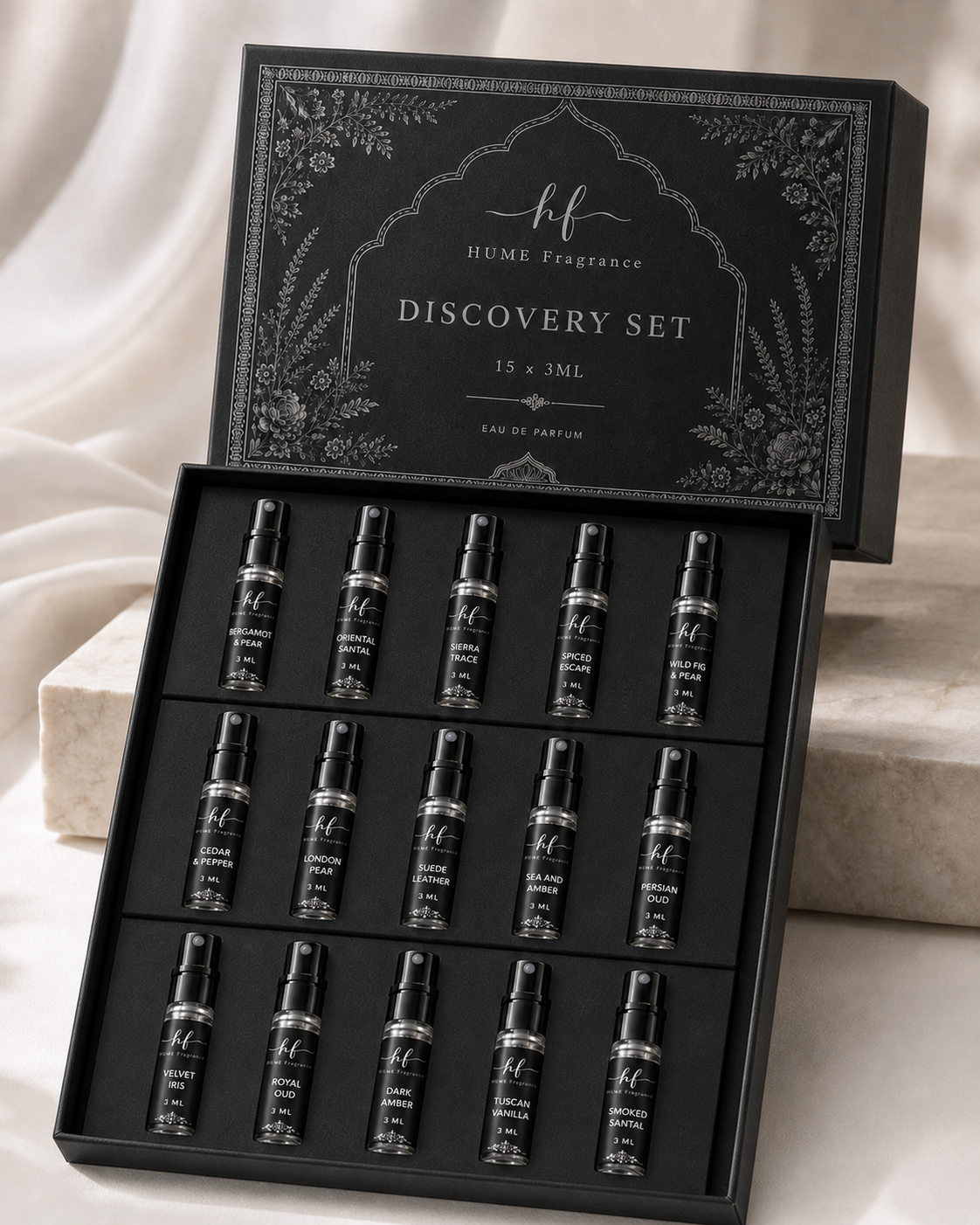
Describe before checking the list
Write fresh, woody, floral, warm or another first impression. Add familiar comparisons such as citrus peel or dry wood without treating the association as an ingredient analysis.
Compare one contrast at a time
Use two clearly different perfumes instead of smelling many in quick succession. Give yourself breaks and return later so the exercise remains a comparison rather than a memory test.
Use labels as a learning aid
After recording your own words, read the notes and see which descriptions help explain the impression. It is fine if you do not perceive every listed element.
Try this before you buy
Write three descriptive words before reading the notes, then add one useful new word after comparing the list.