PRE ORDERFree delivery over INR 500. Use HUME15 on your first order.

Technology Comparison

Water Diffuser vs. Oil Diffuser: The Complete Technical Comparison

Confused between ultrasonic water diffusers and waterless cold-air oil diffusers? While they both fragrance the air, their underlying physics, coverage capabilities, maintenance requirements, and safety profiles are completely different.

Spatial Guidance

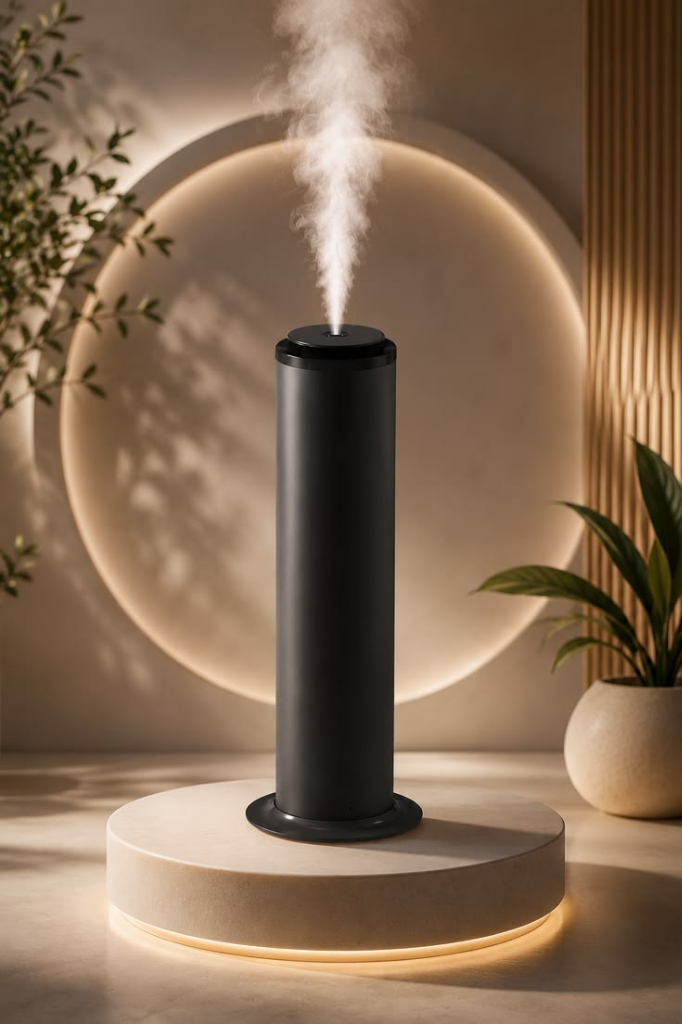
The fundamental difference is that a water diffuser uses ultrasonic vibration to disperse a moist mist of water diluted with a few drops of oil, whereas a waterless oil diffuser uses high-pressure cold-air micro-nebulization to disperse 100% pure fragrance oil as dry, sub-micron nanoparticles without heat, water, or residue.

Key Strategic Insights

Medium: Water diffusers spray moist water steam; waterless nebulizers diffuse 100% pure concentrated fragrance.

Coverage: Water diffusers cover 100–300 sq ft max; waterless cold-air nebulizers cover 1,000 to 20,000+ sq ft.

Residue: Water diffusers create surface dampness and mold risks; cold-air nebulizers leave zero moisture or oil residue.

Refill Frequency: Water diffusers require daily or twice-daily water refills; commercial oil diffusers run 60–90 days per refill.

How Ultrasonic Water Diffusers Operate

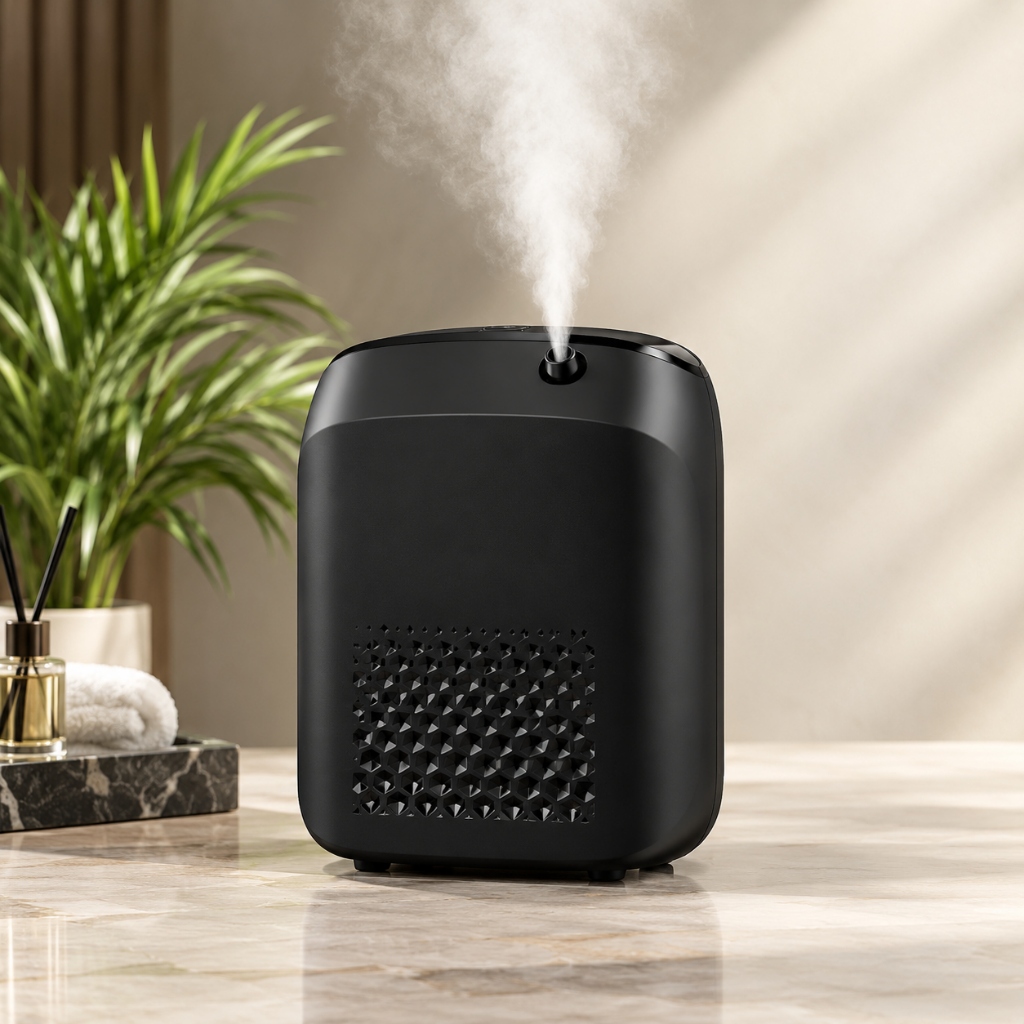
Ultrasonic diffusers contain a small ceramic disc at the bottom of a water reservoir. Vibrating at ultrasonic frequencies (1.6 to 2.4 MHz), the disc creates capillary waves that throw microscopic droplets of water and essential oil into the air as visible white vapor. Because 99% of the mist is water, they act primarily as mini-humidifiers with localized, short-lived scent throw.
How Waterless Cold-Air Oil Nebulizers Operate

Waterless nebulizers use compressed airflow and the Venturi effect to break pure fragrance oil into microscopic dry aerosol particles under 1 micron. Because no water is added, the fragrance is undiluted, long-lasting, and capable of traveling through HVAC ductwork and across thousands of square feet without condensing.

The Business and Facility Implications

In a commercial setting, ultrasonic water diffusers are completely impractical: facility staff cannot refill dozens of water tanks daily, and the resulting humidity damages electronic equipment, fosters bacterial growth in stagnant water basins, and creates slip hazards on hard floors. Waterless nebulizers provide hands-off, automated commercial reliability.

HUME Spaces Architecture

Explore the Complete HUME Spaces Collection

Discover cold-air micro-nebulizers, whole-building central HVAC scenting, and over 50 IFRA-certified spatial fragrance oils engineered for Indian hospitality.

Back to HUME Spaces
01

Choose a Water Diffuser If:

You want a small bedside nightstand gadget in a dry winter room and don't mind refilling water daily.

02

Choose a Waterless Nebulizer If:

You want professional, consistent fragrance across 1,000+ sq ft with zero residue and 60-day hands-off operation.

03

For Commercial Properties:

Always standardize on waterless cold-air nebulizers (such as the HUME Pro Commercial Tower).

The HUME Standard

Measured, subtle and continuous.

Review the space, volume, airflow, and occupancy

Select vessel format: Reeds vs. Room Spray vs. Cold-Air Machine

Calibrate intensity and placement for optimum sillage

Maintain with approved spatial refills and scheduled care

Frequently Asked Questions

Do waterless oil diffusers use more oil than water diffusers?

No. While waterless diffusers use pure oil, they operate on precise intermittent duty cycles (e.g. 20s on, 100s off) and smart weekday schedules, making their oil consumption highly predictable and economical over time.

Can water diffusers cause mold in air-conditioned spaces?

Yes. Adding water vapor directly into sealed, air-conditioned rooms increases relative indoor humidity, promoting mold spores in drywall, air ducts, and soft furnishings.

AEO Knowledge Base

Scent Architecture & Engineering Answers

Authoritative, data-backed answers to essential commercial scenting, HVAC micro-nebulization, and olfactory branding questions.

Scent Architecture 101

What is Commercial Scenting? The Definitive Business Guide

Commercial scenting (also known as ambient scenting or scent marketing) is the strategic diffusion of fine fragrance throughout commercial environments—including hotels, retail stores, corporate offices, and fitness clubs—using automated, waterless cold-air micro-nebulizers.

Read Answer
Engineering & Technology

How Does a Commercial Fragrance Diffuser Work? The Physics of Cold-Air Nebulization

Unlike consumer diffusers that rely on heat or water, commercial fragrance diffusers utilize advanced cold-air micro-nebulization technology. Discover the mechanical engineering, aerodynamics, and fluid dynamics that power commercial scent diffusion.

Read Answer
Hospitality Secret Revealed

How Do Hotels Make Their Lobbies Smell Good? The 5-Star Scent Blueprint

Ever stepped into a Ritz-Carlton, Westin, or luxury boutique resort and wondered how their lobby always smells effortlessly divine? It is neither candles, incense, nor housekeeping spray cans. Explore the exact systems, scent notes, and architectural methods luxury hotels deploy.

Read Answer
Hardware Comparison Guide

What Fragrance Diffuser is Best for a Hotel? Commercial Scent Machine Review

Selecting the wrong scent diffuser for a hotel leads to noisy compressors, uneven scent hot-spots, and ruined marble floors. Discover which commercial fragrance diffuser delivers whisper-quiet, residue-free performance across hotel lobbies, ballrooms, and guest corridors.

Read Answer
Centralized Diffusion Architecture

What is HVAC Scenting? Whole-Building Fragrance Distribution Explained

HVAC scenting is the most sophisticated, uniform, and cost-effective method to scent large commercial properties. Discover how scent machines integrate with central air handling units (AHUs) to distribute fragrance invisibly across entire floors.

Read Answer
Pricing & Investment Guide

How Much Does Commercial Scenting Cost? Pricing, Equipment & ROI Breakdown

Whether you run a boutique salon, a 2,000 sq ft gym, or a 50,000 sq ft corporate office, understanding the true cost of commercial scenting is critical. Explore hardware pricing, monthly fragrance consumption, and managed service models.

Read Answer
Maintenance & Consumption

How Often Does a Commercial Diffuser Need Fragrance Oil? Refill Timelines & Math

One of the most frequent operational questions facility managers ask is how often commercial diffusers need refills. Discover the mathematical formula for fragrance oil consumption, duty-cycle settings, and practical refill schedules.

Read Answer
Sizing & Coverage Recommendations

What is the Best Diffuser for a 2000 Sq Ft Space? Expert Sizing Guide

A 2,000 sq ft commercial space—whether a modern fitness studio, dental clinic, law office, or retail showroom—is too large for consumer diffusers but doesn't necessarily require complex HVAC ducting. Discover the ideal cold-air nebulizer for this exact footprint.

Read Answer
Athletic Sensory Science

What Fragrance is Best for a Gym? Energizing, Odor-Neutralizing Scents

Selecting a gym fragrance is a delicate science: it must neutralize intense body odor and sweat without feeling heavy, cloying, or perfumed. Learn the exact scent notes proven to energize members, increase workout endurance, and eliminate gym funk.

Read Answer
Bespoke Olfactory Branding

How Do Businesses Create a Signature Scent? The 4-Stage Development Process

A signature scent is the olfactory equivalent of a company's logo, typography, and architectural identity. Discover how world-class brands collaborate with master perfumers and sensory strategists to craft exclusive, bespoke spatial fragrances.

Read Answer
Data & Academic Research

Is Scent Marketing Effective for Businesses? Academic Studies, Data & ROI

Is ambient scenting a legitimate commercial strategy or merely an aesthetic luxury? Examine peer-reviewed research from Harvard, Oxford, and the International Journal of Marketing showing how scent impacts customer dwell time, perceived value, and sales revenue.

Read Answer

Begin with the space

Tell us what the room should feel like.

Plan my space